
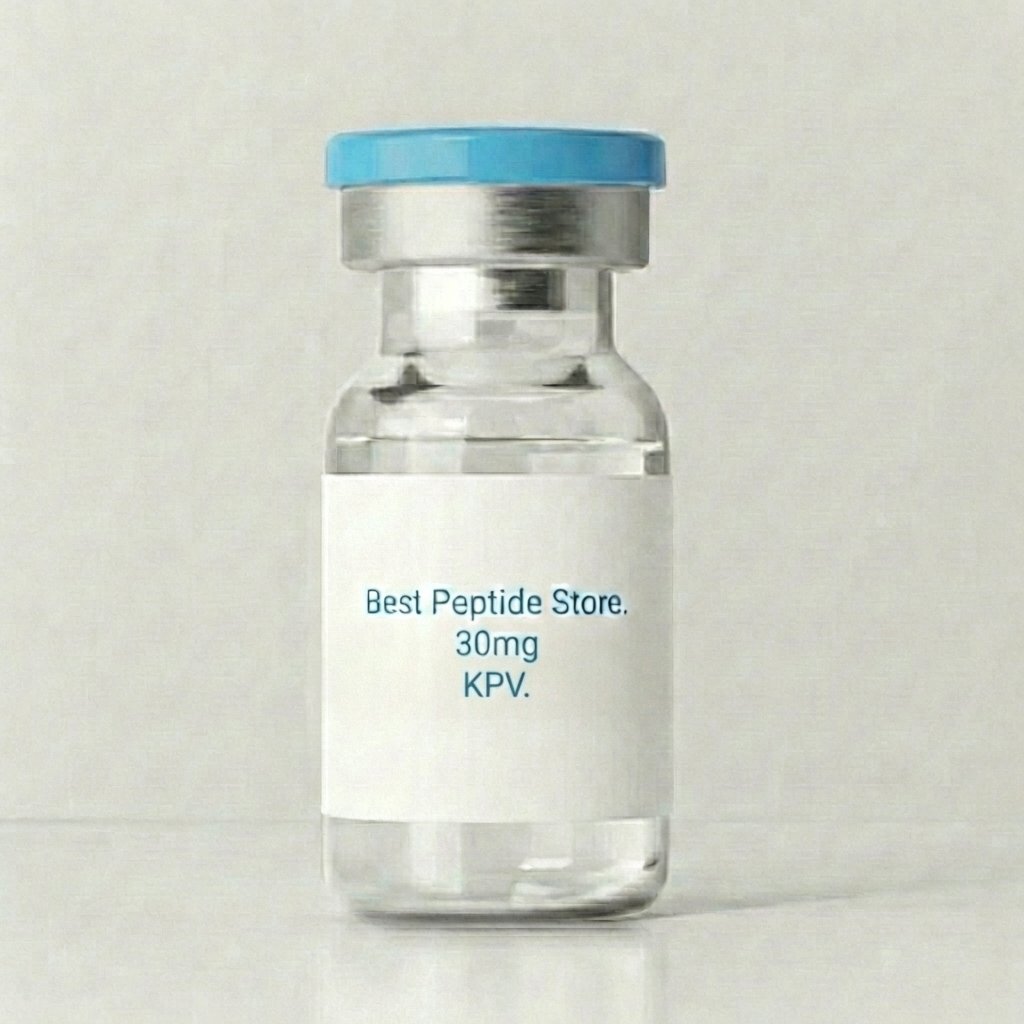
Description
Buy KPV Online EU: High Purity Lysine-Proline-Valine for Anti-Inflammatory Research
Unlocking the Anti-Inflammatory Potential of the KPV Tripeptide
In the evolving landscape of peptide research, the KPV tripeptide—representing the C-terminal sequence Lysine-Proline-Valine of alpha-melanocyte-stimulating hormone (α-MSH)—has emerged as a molecule of significant interest for scientists studying inflammatory pathways and tissue repair mechanisms . Unlike its parent hormone, KPV retains potent anti-inflammatory properties while being free from melanotropic effects, making it a focused subject for preclinical investigations .
At eupeptideshop.org, we provide European laboratories with access to premium research-grade KPV. As a trusted supplier specializing in buy peptides EU, we ensure that your research begins with the highest quality materials available. For researchers looking to buy KPV online, understanding its molecular profile, stability, and applications is paramount. This guide serves as your definitive resource.
Molecular Profile and Structural Integrity
For valid and repeatable experimental data, the integrity of the research compound is non-negotiable. Our KPV adheres to the strictest pharmaceutical-grade specifications.
-
Synonyms: α-MSH (11-13), Lysine-Proline-Valine
-
Molecular Formula: C16H30N4O4
-
Molecular Weight: 342.43 g/mol
-
CAS Number: 67727-97-3
-
Sequence: H-Lys-Pro-Val-OH
-
Purity: ≥99% (Verified by HPLC and Mass Spectrometry). Our rigorous HPLC analysis confirms a purity profile that exceeds standard research requirements, minimizing variables in your assays .
-
Appearance: White to off-white lyophilized powder .
Physicochemical Properties: Solubility and Stability
Proper handling begins with understanding the compound’s behavior. KPV is a hydrophilic peptide that requires specific storage and reconstitution protocols to maintain its stability.
Solubility Profile
-
Optimal Solvent: Sterile distilled water or bacteriostatic water is the preferred vehicle for reconstitution, providing the most physiologically compatible solution for in vivo and in vitro studies .
-
Alternative Solvents: For achieving higher concentrations or in specific experimental contexts, dilute acetic acid can be used. If DMSO is required, it should be used sparingly and in very small volumes to avoid cellular toxicity .
-
Solvents to Avoid: Do not dissolve KPV in pure organic solvents such as acetonitrile, methanol, or chloroform, as these will degrade the peptide .
Stability and Storage Guidelines
Maintaining the bioactivity of your KPV peptide is critical for longitudinal studies.
-
Lyophilized Powder (Long-Term Storage): Store at -20°C (-4°F) or below. Under these conditions, the peptide remains stable for several years. Protect from light and moisture .
-
Reconstituted Solution (Short-Term Storage): Once reconstituted, the peptide solution should be refrigerated immediately at 2-8°C (35.6-46.4°F). Use within 30 days to ensure optimal stability and potency .
-
Critical Protocol: Avoid repeated freeze-thaw cycles. Aliquot the reconstituted solution into single-use vials before freezing if long-term storage of the solution is necessary. Thawing and refreezing leads to rapid degradation and loss of activity .
Known Research Applications and Mechanisms
The scientific community continues to explore the therapeutic potential of KPV, particularly in the context of inflammatory disease models. It is a staple in laboratories focused on immunology and gastroenterology.
1. Inflammatory Bowel Disease (IBD) Research
The most prominent area of KPV research lies in its application to models of colitis and IBD. Studies published in journals such as Inflammatory Bowel Diseases have demonstrated that KPV significantly reduces inflammatory infiltrates and myeloperoxidase (MPO) activity in murine models of DSS-induced colitis .
-
Mechanism of Action: KPV exerts its anti-inflammatory effects by entering cells and inhibiting the NF-κB pathway, a core transcription factor regulating pro-inflammatory cytokines. It suppresses the production of mediators like TNF-α, IL-1β, and IL-6 .
-
Targeting: It shows high affinity for the PepT1 transporter, which is overexpressed in inflamed colonic epithelial cells, allowing for targeted delivery to the site of inflammation .
2. Wound Healing and Tissue Repair
Research indicates that KPV can enhance the migration of epithelial cells, a crucial step in wound re-epithelialization and repairing mucosal barriers. By modulating the inflammatory environment, it helps shift the balance from chronic inflammation toward a reparative state .
3. Antimicrobial Effects
Beyond inflammation, KPV has demonstrated antimicrobial properties against pathogens such as Staphylococcus aureus and Candida albicans. This dual action of reducing infection while modulating inflammation makes it a compound of interest in dermatological and wound infection research models .
Research Protocols: Handling and Reconstitution
For researchers in Germany, France, the Netherlands, and Spain looking to integrate KPV into their workflows, precision in handling ensures data integrity.
Standard Reconstitution Protocol (for a 10mg vial) :
-
Preparation: Allow the lyophilized vial to reach room temperature to prevent condensation. Clean the rubber stopper with an alcohol swab.
-
Diluent Calculation: To achieve a standard research concentration of ~3.33 mg/mL, draw 3.0 mL of bacteriostatic water into a sterile syringe.
-
Injection: Slowly inject the diluent against the inner glass wall of the vial. Avoid direct forceful streams onto the lyophilized powder to prevent foaming.
-
Dissolution: Do not shake. Gently swirl or roll the vial until the powder is completely dissolved. The solution should be clear.
-
Labeling: Immediately label the vial with the date of reconstitution and concentration.
Handling and Safety Considerations:
-
For Research Use Only: KPV is strictly for laboratory research purposes and is not for human or veterinary use .
-
Aseptic Technique: Always use sterile equipment and work in a clean environment to prevent contamination.
-
Personal Protective Equipment (PPE): Wear appropriate lab coats, gloves, and eye protection when handling peptides and solvents.
Why Purchase KPV from eupeptideshop.org?
As a premier peptide supplier Spain researchers trust, and a reliable source for laboratory peptides Netherlands institutions, we bridge the gap between global peptide synthesis and European research needs. When you decide to buy KPV online for your next study, choose the partner that prioritizes your science.
-
EU-Based Inventory: Our warehouse ensures rapid, reliable delivery across the continent, from Berlin to Lyon, without the delays of international customs.
-
Certified Purity: Every batch is accompanied by a Certificate of Analysis (CoA) confirming ≥99% purity via HPLC, ensuring your results are attributable to the peptide, not impurities .
-
Compliant Excellence: We adhere to stringent quality control measures, providing research chemicals EU compliant with all regulations for laboratory reagents.
Elevate your research on inflammatory pathways and gastrointestinal health. Visit eupeptideshop.org today to place your order for high-purity KPV and experience the difference in quality and service.
Frequently Asked Questions: Purchasing KPV for Research in Europe
Q1: I want to buy KPV online for my lab in Germany. How do I know your peptide meets our quality standards for high purity peptides Germany?
A: All our KPV peptides undergo rigorous third-party HPLC and Mass Spectrometry analysis. We guarantee a purity of ≥99%, and a Certificate of Analysis (CoA) is available for every batch. We cater specifically to the German market’s demand for precision and quality.
Q2: Is eupeptideshop.org a legitimate supplier for buy peptides EU? How fast is shipping to France for peptides for research France?
A: Yes, we are a premium EU-based online retailer. We maintain a local inventory to ensure rapid dispatch. Shipping to France, as well as other major markets like laboratory peptides Netherlands and peptide supplier Spain, typically takes 2-3 business days via tracked courier services.
Q3: Can I combine KPV with other products, like BPC-157 Europe, in my research?
A: Yes, many researchers explore combination therapies. KPV is often studied alongside BPC-157 Europe in models investigating gastrointestinal health and systemic inflammation due to their complementary regenerative and anti-inflammatory profiles .
Q4: What is the difference between the KPV peptide and the full α-MSH molecule for my experiments?
A: Unlike α-MSH, the KPV tripeptide (Lysine-Proline-Valine) retains the anti-inflammatory properties but lacks the melanocyte-stimulating activity, meaning it will not affect pigmentation in models where that is a variable. It is also smaller, more chemically stable, and often considered a more focused tool for studying anti-inflammatory pathways .
Q5: What is the recommended solvent to reconstitute KPV for in vivo studies?
A: For most in vivo research applications, sterile bacteriostatic water or sterile saline is recommended. This maintains physiological compatibility. For in vitro work where higher concentrations are needed, a small amount of dilute acetic acid can be used as an alternative solvent, though water is always preferred initially .
Q6: What are the exact storage conditions upon arrival?
A: Upon receiving your order, store the lyophilized vial in a freezer at or below -20°C. It is crucial to keep it in a dry, dark place. Do not store at room temperature. If you reconstitute the peptide, store it in a refrigerator at 2-8°C and use it within 30 days ........ .. .. google



Reviews
There are no reviews yet.